












Durable Labels Engineered for Harsh Environments and Operational Reliability
When label failure creates operational risk, reliability matters.
Order now
- Give us some initial information
- Review and test your label
- Production and shipping
Operational risks
Designed to remain adhered, legible, scannable, and operationally reliable through heat, cold, chemicals, moisture, abrasion, cleaning, and demanding manufacturing conditions.
CleanMark helps companies develop durable labeling systems engineered around real-world operating conditions—not simply whether the label initially sticks during testing.
- Lost traceability
- Failed scans
- Production delays
- Compliance concerns
- Increased rework
The operational impact of label failure
When labels fail, the impact often extends far beyond the label itself.
A labeling system that smears, peels, curls, falls off, or becomes unreadable can create downstream operational problems across manufacturing, inventory control, quality systems, logistics, compliance, and customer experience.
| Label Failure | Operational Impact |
|---|---|
| Barcode degradation | Failed scans |
| Adhesive failure | Relabeling and delays |
| Print smearing | Traceability risk |
| Residue after removal | Cleaning and contamination concerns |
| Environmental failure | Compliance and operational risk |
Most labeling failures begin as small inconveniences before becoming larger operational problems.
As environments become more demanding, labeling reliability becomes increasingly tied to operational reliability.
That is why CleanMark develops durable labeling systems engineered around the actual environment, workflow, surface, print method, and operational conditions surrounding the application.
Signs your labeling system may be underperforming
Many labeling problems begin as small operational inconsistencies before becoming larger reliability issues over time.
- Labels peeling after cleaning
- Barcodes becoming difficult to scan
- Adhesive residue remaining after removal
- Labels failing after exposure to temperature extremes
- Variable print smearing during handling
- Inconsistent performance across facilities or shifts
- Frequent relabeling or replacement
- Label failures increasing as production scales
These issues are often symptoms of broader incompatibilities between the label construction, surface, environment, print method, and operational workflow.
How companies typically find us
Most companies do not start by searching for durable labels. They start because labeling is creating operational friction. The labels may appear to work initially, but problems begin emerging as environments become more demanding, production scales, or processes evolve.
The workarounds that once kept operations moving are no longer reliable. That is often when companies engage CleanMark.

Production Changes
- New equipment introductions
- Automation initiatives
- Facility expansions
- Increased production volumes
- New manufacturing processes

Environmental Changes
- Exposure to higher temperatures
- Freezer or cryogenic storage requirements
- New cleaning procedures
- Chemical exposure
Outdoor use requirements

Production Changes
- New equipment introductions
- Automation initiatives
- Facility expansions
- Increased production volumes
- New manufacturing processes

Environmental Changes
- Exposure to higher temperatures
- Freezer or cryogenic storage requirements
- New cleaning procedures
- Chemical exposure
Outdoor use requirements
How durable labeling systems are built
A durable label is not a single material. It is a system made up of multiple performance layers working together under real-world operating conditions.
Environmental Conditions
- Temperature exposure
- Chemical exposure
- Moisture and cleaning
- UV exposure
- Abrasion and handling
Label Construction
- Facestock performance
- Adhesive performance
- Print durability
- Surface compatibility
Operational Factors
- Print method
- Application method
- Workflow handling
- Long-term dwell time
Why this matters
A facestock may resist chemicals but fail under abrasion.
An adhesive may perform well on stainless steel but fail on low-surface-energy plastics.
Print may remain readable initially but degrade during repeated cleaning cycles.
The more demanding the environment becomes, the more labeling stops being a commodity purchasing decision and becomes an operational reliability decision.
CleanMark evaluates the entire operational system surrounding the label—not simply whether the label initially sticks during testing.
Where durable labeling systems commonly break down
Most durable labeling failures can be traced back to one of five environmental stress categories.
Heat Related Failures
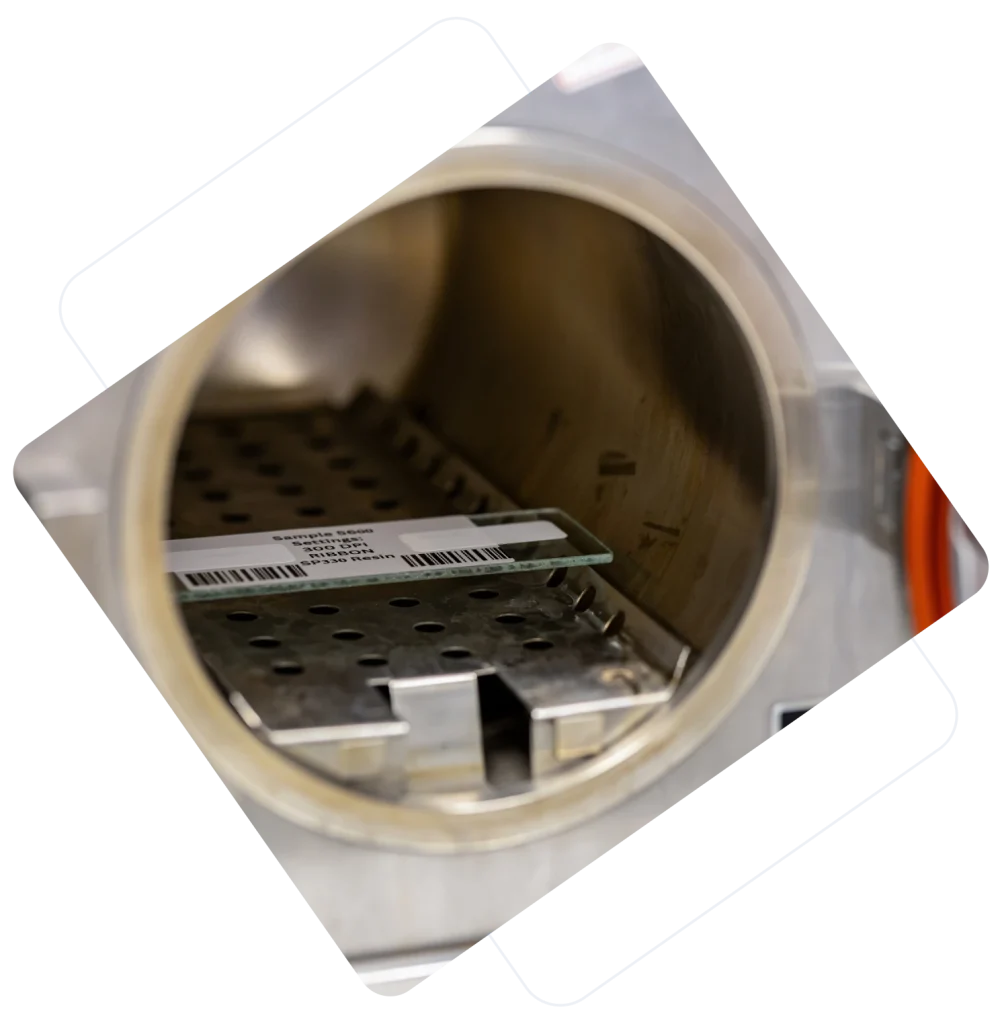
High temperatures can cause labels to shrink, discolor, curl, become brittle, lose adhesion, or degrade print readability over time.
Common Environments
- Sterilization
- Thermal processing
- Electronics manufacturing
- Powder coating
- High-heat industrial production
Common Solutions
- Heat resistant labels
- High-temperature printable labels
- Autoclave compatible labels
Explore Heat Resistant Labels
Cold And Cryogenic Failures
Standard adhesives often become brittle or lose bond strength in freezer and cryogenic environments.
Common Environments
- Cold-chain logistics
- Biotechnology
- Pharmaceutical storage
- Laboratory environments
- Liquid nitrogen storage
Common Solutions
- Refrigerator labels
- Freezer labels
- Cryogenic labels
Explore Cryogenic & Freezer Labels
Chemical And Cleaning Failures
Solvents, disinfectants, and aggressive cleaners can smear print, degrade facestocks, weaken adhesives, or reduce readability.
Common Environments
- Pharmaceutical manufacturing
- Laboratories
- Washdown environments
- Healthcare settings
Common Solutions
- Chemical resistant labels
- Solvent resistant labels
- Waterproof labels
Explore Chemical Resistant Labels
Abrasion And Handling Failures
Frequent handling, vibration, equipment contact, or transportation can damage labels over time.
Common Environments
- Warehousing
- Asset tracking
- Logistics
- Manufacturing operations
Common Solutions
- Waterproof labels
- UV resistant labels
- Outdoor durable labels
Explore Waterproof Labels
Moisture And Outdoor Exposure Failures
Standard adhesives often become brittle or lose bond strength in freezer and cryogenic environments.
Common Environments
- Cold-chain logistics
- Biotechnology
- Pharmaceutical storage
- Laboratory environments
- Liquid nitrogen storage
Common Solutions
- Refrigerator labels
Freezer labels
Cryogenic labels
Explore Cryogenic & Freezer Labels
The cost of label failure
The cost of a label is usually easy to measure. The cost of label failure is often much harder to see.
A single labeling issue may seem insignificant. Across hundreds or thousands of products, however, the operational impact can become substantial.
| Label Failure | Potential Operational Impact |
|---|---|
| Failed barcode scans | Reduced productivity |
| Relabeling activities | Increased labor costs |
| Print degradation | Traceability concerns |
| Adhesive failure | Production delays |
| Residue after removal | Additional cleaning and maintenance |
| Compliance issues | Investigations and corrective actions |
| Product identification errors | Quality and customer risks |
Many organizations focus on label cost while overlooking the operational cost of failure.
As environments become more demanding, reliability often becomes more valuable than the label itself.
Built from real-world labeling challenges
CleanMark’s expertise in durable labeling did not begin with durable labels.
More than 30 years ago, semiconductor manufacturers approached CleanMark with a problem that standard labels could not solve.
Labels applied to wafer boxes were creating contamination concerns inside highly controlled manufacturing environments. Adhesive residue, particle generation, and inconsistent label performance created risks that extended far beyond the label itself. Product quality, manufacturing yield, and operational reliability were all at stake.
To solve the problem, CleanMark re-evaluated the entire labeling system.
Materials were reconsidered. Adhesives were reformulated. Manufacturing processes were refined. Cleaning procedures were introduced. Packaging and handling methods were redesigned to better support contamination-sensitive environments.
The result was one of the industry’s early purpose-built cleanroom labeling solutions.
As customers encountered new labeling challenges, that same systems-based approach expanded beyond semiconductor manufacturing into life sciences, biotechnology, medical device manufacturing, pharmaceutical production, laboratories, and industrial environments.
Over time, we discovered that many labeling failures shared a common pattern.
What initially appeared to be a label problem was often a broader interaction between the environment, surface, print process, application method, handling procedures, and operational requirements surrounding the label.
Today, CleanMark applies those lessons across thousands of labeling applications where reliability matters.
We do not simply evaluate labels. We evaluate the systems surrounding them.
Because the more demanding the environment becomes, the more labeling stops being a commodity purchasing decision and becomes an operational reliability decision.
Durable labeling systems built for real-world operational reliability
Whether you are dealing with heat, chemicals, cold storage, cleaning procedures, abrasion, or long-term environmental exposure, CleanMark helps companies develop labeling systems designed around real-world operating conditions.
Not sure where the failure is occurring? We can help evaluate the entire labeling system