









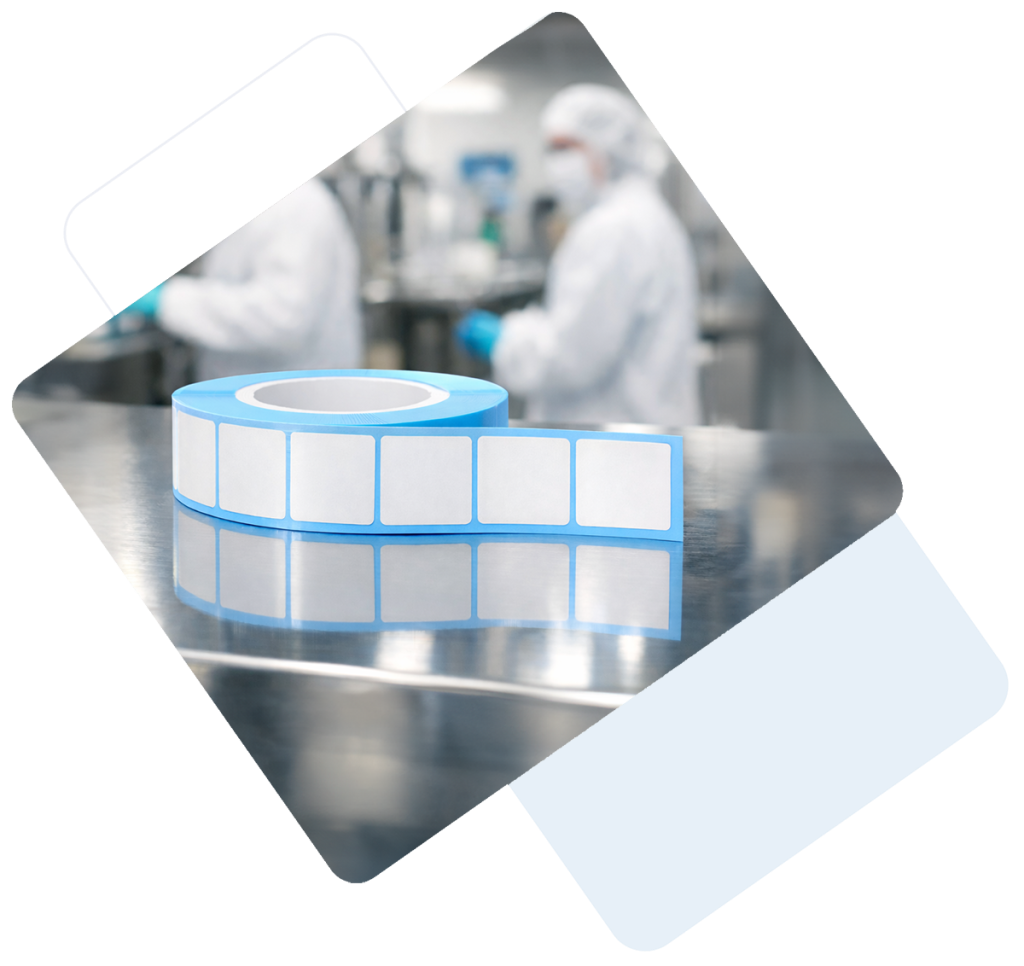
Cleanroom labels that protect what matters
Choose the right label before it impacts manufacturing, product integrity or patient safety.
Order now
- Give us some initial information
- Review and test your label
- Production and shipping
Risks of using standard labels in controlled environments
Labels are often treated as interchangeable, but the wrong label can introduce risk once it’s in use.
- Compromised yield and contamination control
- Audit and compliance risk
- Re-cleaning, rework, and requalification
What cleanroom labels are designed to prevent
Cleanroom labels are engineered to reduce these risks before they impact production, compliance, or product integrity.
- Particle contamination
- Adhesive residue on critical surfaces
- Outgassing and material interference
- Outgassing and material interference
- Outgassing and material interference
How cleanroom labels differ from standard labels
| Cleanroom Labels | Standard Labels |
|---|---|
| Engineered to minimize particle shedding | Not controlled for particle generation |
| Qualified materials with low outgassing | Outgassing varies by material |
| Designed for clean, residue-free removal | Residue risk depends on adhesive and dwell time |
| Suitable for ISO-classified environments | Not designed for controlled environments |
| Maintains performance through cleaning and wipe-downs | Degradation common under cleaning conditions |
| Supports contamination control and validation processes | Limited or no validation support |
| Controlled environments, aseptic workflows, cleanroom assets | Used in general industrial applications |
Where label performance matters most
Controlled environments place unique demands on materials, adhesives, printing, handling, and long-term reliability.
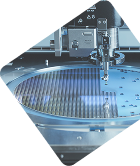
Semiconductor manufacturing
Reduce particle, residue, and labeling risks that can affect yield and process integrity.
Pharmaceutical manufacturing
Support traceability, aseptic workflows, cleaning exposure, and regulated production environments.
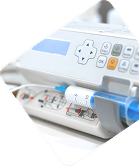
Medical devices
Maintain reliable identification through manufacturing, handling, storage, and compliance processes.
Biotechnology & laboratories
Support sample identification, controlled workflows, and long-term readability in critical research settings.
How we engineer label performance for your application
Label performance depends on how materials interact with your environment, surfaces, application processes, and workflow requirements.
Chemical exposure
Resistant facestocks and coatings protect printed information from solvents, disinfectants, and harsh cleaning agents.
Cleaning cycles
Abrasion-resistant materials withstand repeated wipe-downs without degrading readability or adhesion.
Temperature conditions
Materials are selected to remain stable across cold storage, ambient, and high-heat environments
Removal requirements
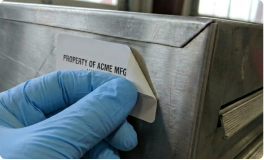
Adhesives are selected based on whether labels need to remove cleanly or remain permanently bonded over time.
Surface type
Adhesives are matched to plastics, metals, glass, textured materials, and other challenging surfaces.
Application method
Label constructions are designed to support manual, semi-automated, and automated application processes.
Print method
Topcoats are selected to support durable, legible printing across thermal transfer, direct thermal, laser and inkjet systems.
Size considerations
Label dimensions are matched to available surface area, barcode requirements, and readability needs
Shape requirements
Label shapes are designed around containers, equipment, packaging, and workflow constraints.
Built around your workflow
Label performance is also influenced by how labels are dispensed, handled, packaged, stored, and integrated into day-to-day operations.
Labels per roll
Configured to support production throughput, operator handling, and storage requirements.
Perforations
Designed to improve dispensing, separation, handling, and workflow control.
Special liners
Release liners are selected to support clean handling, reliable release performance, and automated application requirements.
Core size & rewind direction
Roll configurations are matched to your printers and applicators for reliable feeding and operation.
Packaging requirements
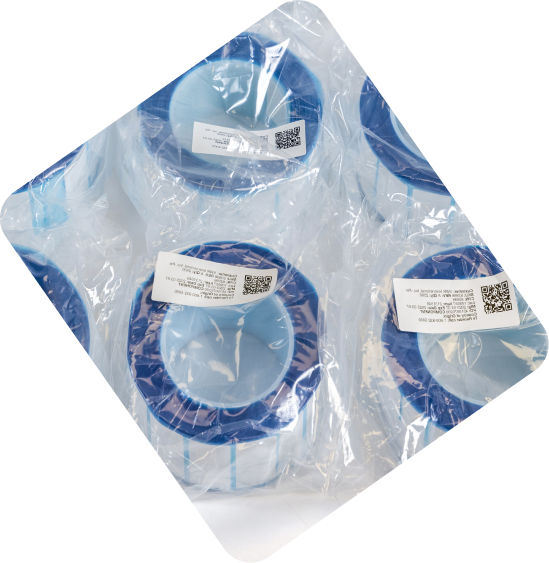
Labels can be packaged to support cleanroom handling, sterile workflows, controlled storage, or protection during transport.

Built from real-world cleanroom challenges
In the 1990’s, a semiconductor manufacturer came to CleanMark with a problem that seemed simple-but carried serious risk.
Labels used on wafer boxes left behind adhesive residue after removal. In a cleanroom environment, that residue could migrate, contaminate processes, and damage sensitive components.
What started as a residue issue quickly revealed a broader problem:
- Traditional label materials could shed particles
- Standard adhesives weren’t designed for clean removal
- Manufacturing and packaging processes introduced additional contamination risk
CleanMark rethought the label from the ground up-materials, adhesives, manufacturing, cleaning, and packaging-resulting in one of the first purpose-built cleanroom labeling solutions.
That same approach still defines how we design labels today; not as a commodity, but as a critical part of the processes they support.
What started with a semiconductor manufacturer in Eugene, Oregon is now used by leading semiconductor and pharmaceutical companies worldwide.
Get the right label for your application
Share a few details with us and we’ll help identify the right label for your use.
Have more questions? We have answers!
Read on for answers to our customers’ most common questions.
When cleanroom labels are the right choice
CleanMark offers a variety of different cleanroom labels, including a fully customized option.
- Environments involving sensitive electronics, laboratory research, or pharmaceutical and medical device production
- Contamination risk could impact yield, results, product integrity, or patient safety
- Label failure could slow production through relabeling, delays, or process interruptions
How we match the right label to your application
Label performance depends on how materials interact with your environment, surfaces, and process. We evaluate key factors to ensure reliable performance in real-world conditions:
Removal requirements
Lorem ipsum dolor sit amet
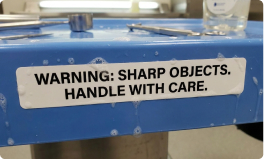
Chemical exposure
Resistant facestocks and coatings protect printed information from solvents and disinfectants
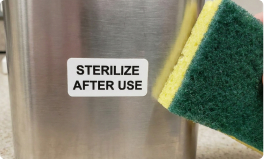
Cleaning cycles
Abrasion-resistant materials withstand repeated wipe-downs without degrading
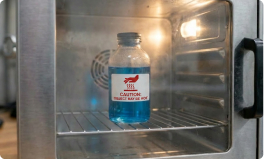
Temperature conditions
Materials are selected to remain stable across your operating temperature range
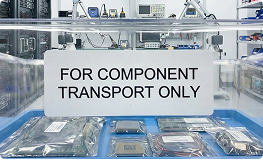
Surface type
Adhesives are matched to substrates, including low-energy plastics commonly used in cleanroom environments
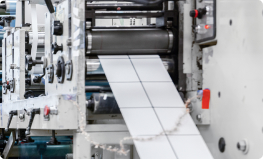
Application method
Label constructions are designed for consistent performance in automated or semi-automated systems
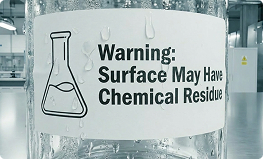
Print method
Topcoats ensure durable, legible print that resists wear and chemical exposure